

UK Car Window Tint Percentages Explained: 5%, 20%, 35% and 50%
Tint percentages catch people out because they sound backwards. A lower number is darker. A higher number lets more visible light through.
The number is usually talking about VLT, or visible light transmission. In normal speak, that means how much light can pass through the glass once the film is fitted. A 5% film is very dark. A 50% film is much lighter. A 70% window lets through a lot more light again.
If you are standing in the workshop looking at a sample board, the difference is obvious. Online, it all gets a bit muddy. Photos depend on the weather, the camera, the colour of the car interior and whether the picture was taken inside or outside.
This is the simple version.
- 5% is the dark privacy look. It is often called limo tint.
- 20% is still dark, but you can normally make out shapes through it in daylight.
- 35% gives a smoked look without making the rear of the car feel boxed in.
- 50% is a light tint, better for a subtle finish or heat/UV performance without much visual change.
None of those numbers should be guessed onto front windows. The front legal limits are a separate conversation, and they matter.
The quick shade check
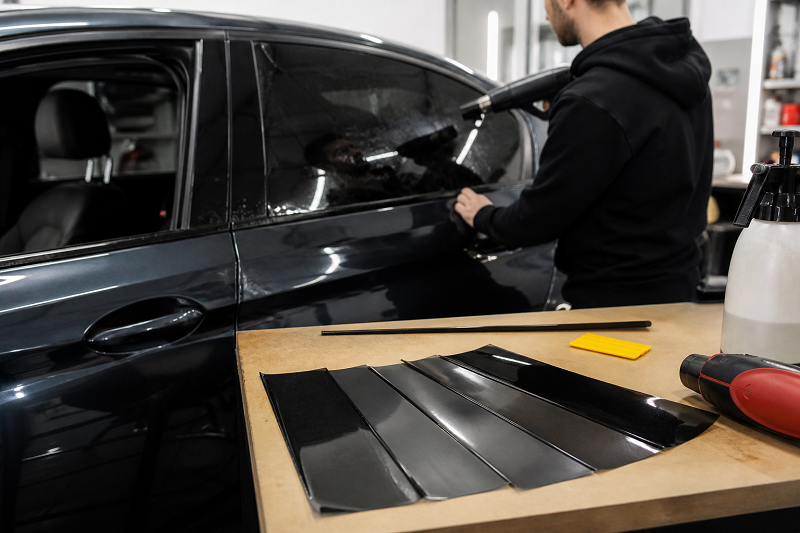
If you want the rear of the car to look factory-dark, 20% is usually the shade people have in mind.
If you want privacy but still want a softer look, 35% is often the better call.
If the main job is heat, glare and UV control, don’t pick only by darkness. The film type matters just as much as the shade.
What 5% tint is like
5% tint is very dark. From outside the car, it gives the strongest privacy. On vans, people carriers and some rear cargo areas, that can be exactly the point: keep tools, prams, luggage or dog cages less visible.
The trade-off is night visibility from inside the car. If you reverse in dark streets, car parks, farm lanes or unlit drives, you will notice it. A reversing camera helps, but the glass is still dark.
We would usually talk a customer through this before fitting it. Some people love 5%. Others choose it because they saw a photo online, then realise 20% would have suited the car and their driving better.
What 20% tint is like
20% is probably the shade most people picture when they say they want a proper tint. It gives privacy and a strong finish, but it is not as heavy as 5%.
On SUVs, estates, hatchbacks and vans, 20% often gives that factory privacy glass look. It can make the car feel finished rather than modified, especially when the shade works with the paint and trim.
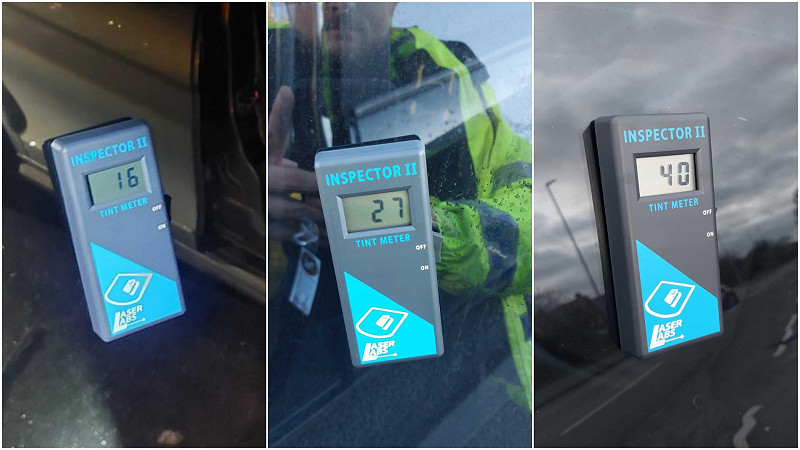
For rear doors, rear quarters and the back screen, 20% is a common choice. For front side glass on road cars, it is a different story. On modern UK vehicles, the front side windows must let at least 70% of light through overall, so a dark 20% film is not suitable there.
Front windows are not a style panel
GOV.UK says that on vehicles first used on or after 1 April 1985, the windscreen must let at least 75% of light through and the front side windows at least 70%.
The rear windows are different. There are no UK light transmission rules for the rear windscreen or rear passenger windows.
That is why the rear of a car can be tinted dark while the front stays legal.
What 35% tint is like
35% is the shade that often gets overlooked. It is not as dramatic as 20%, but it can look very clean on the right car. You still get a privacy upgrade at the rear, glare reduction and a more finished look, without making the cabin feel as dark.
It suits drivers who do a lot of night driving, families who still want a bit of brightness in the back seats, and cars where a very dark rear would look too heavy.
What 50% tint is like
50% is subtle. A lot of people walk past it on a shade board because it does not shout. But if you want a gentle smoke effect, UV protection and a more comfortable cabin without changing the car’s character, it can make sense.
Light films also matter when you are looking at ceramic or clear performance films. Heat rejection is not just about how dark the glass looks. A better film can outperform a darker basic film, depending on the range you choose.
The bit worth remembering
Tint shade is only half the decision. The other half is the film itself and the way it is installed.
Cheap film can turn purple, scratch easily, bubble, peel or look hazy around the edges. A good film, fitted properly, should look like it belongs on the car.
At Automotive Solutions in Brighouse, we fit LLumar window film and talk through the shades in person. If you are unsure between 20%, 35% and 50%, come and look at real samples rather than trying to judge it from edited photos.
You can also read more about our vehicle window tinting in Brighouse.