

What Is VLT in Window Tint? A Straightforward Guide for Drivers
VLT stands for visible light transmission. It is the amount of visible light that can pass through glass or film.
If a film is 20% VLT, it lets around 20% of visible light through. If a film is 50% VLT, it lets around half through. Lower number, darker tint.
Simple enough. The bit that catches people is that the car window already has a VLT before film is fitted. The final reading is the glass and film together.
That is why a tint shade cannot be picked properly from the film number alone, especially near the legal limits for front glass.
Lower number, darker glass
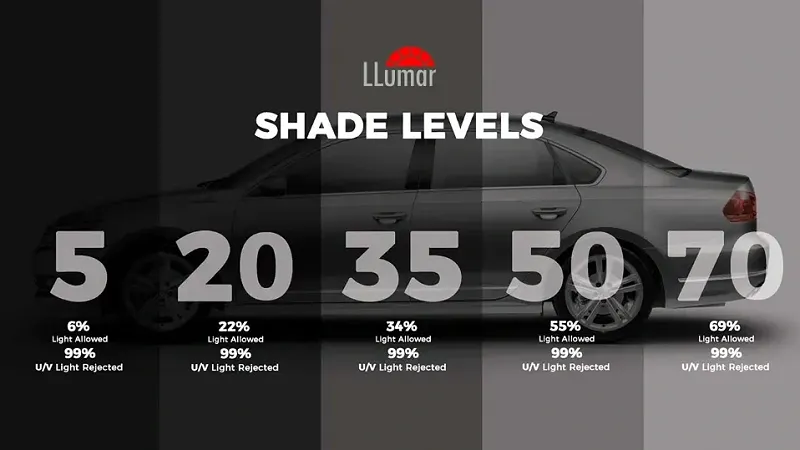
5% is very dark.
20% is a strong privacy shade.
35% is a softer smoked look.
50% is subtle.
Once you know that, the shade board starts to make sense.
Glass plus film is the real number
Here is a rough example. If a front side window lets 80% of light through before tinting, and a 70% film is added, the finished glass will not stay at 70%. The combined figure is roughly 56%.
That is too low for a modern UK front side window.
The maths is not something most drivers need to do. The point is easier: film is added to glass that already has a light transmission figure. The finished window is what counts.
VLT is not the same as heat rejection
This is another common mix-up. A darker film can reduce glare and make the car feel more private, but darkness is not the only way to manage heat.
Better film technology can target heat more effectively. LLumar ceramic films, for example, are made for drivers who want comfort, UV protection and glare reduction without relying only on a dark look.
So if your main complaint is “the car gets roasting”, do not only ask for the darkest legal tint. Ask what film range fits the problem.
Pick the shade in real light
A shade can look different on a white car, a black car, a van, an SUV or a car with a pale interior.
It also changes between bright sun, grey skies and night driving.
Seeing samples in person is still better than guessing from a phone screen.
How VLT affects daily driving
On rear windows, darker VLT can be useful for privacy and style. It can help children in the back seats with glare and makes belongings less obvious from outside.
On front windows, legal limits and visibility matter more than looks. You need to see junctions, mirrors, cyclists, kerbs and people crossing the road in poor light.
On a work van, a darker rear section can help keep tools out of sight. On a family car, 20% or 35% may be easier to live with than 5%, especially if you reverse in dark places.
The best shade is the one that suits the car and the way you use it.
If you are in West Yorkshire and want to compare VLT shades in person, visit Automotive Solutions in Brighouse or read more here: car window tinting in Brighouse.